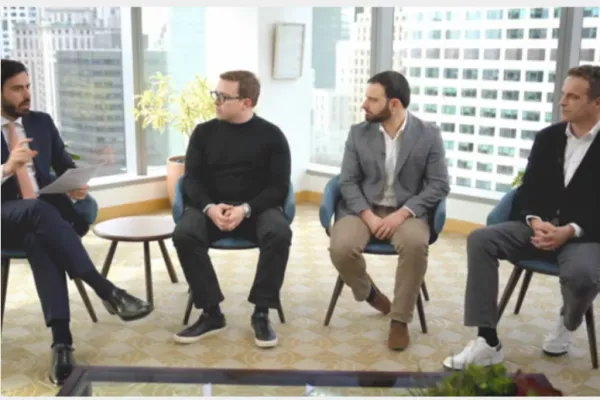


When I met Soraya Chabarek in New York after a few calls on Zoom, we immediately dove into talking about first jobs, cherished mentors, being a woman in finance, and how the arc of her career feels logical and planned — well, at least in retrospect. Connecting with people runs through this conversation with Soraya, who believes technology can accelerate access, but real human relationships ultimately hold investment firms together.
(Listen to the full conversation on Spotify, Apple Podcasts or by scrolling to the end of this article.)
That belief has shaped how Soraya approaches leadership as president and CEO of Manulife CQS Investment Management, and it frames a problem asset managers have never fully solved: succession. Hedge funds, in particular, have often struggled to survive beyond their founders, whose investment judgment and personal authority are difficult to replicate.
In episode 12, Soraya explains why she never believed succession could mean replacing one star investor with another, no matter how brilliant. Even legendary investors are human after all. Instead, she has built teams where people collaborate with one another, embedded decision-making into the organization itself, and created a culture in which talented analysts and managers want to stay long term, rather than leaving for competitors or other industries.
She traces that philosophy back to early bosses and experiences working alongside some of the industry’s most influential investors, lessons that continue to shape how CQS invests across multi-asset credit, structured credit, and regulatory capital strategies.
The conversation also touches on what went right in CQS’s acquisition by Manulife, at a time when many asset management mergers fall short of expectations. Soraya describes resisting the urge to rush into a deal, knowing that firms often get only one chance to do it right. The result is a balance many firms chase but few achieve. Remaining a specialist manager that can define its future, while gaining the stability, distribution, and long-term capital of a global parent.

With credit suddenly back at the center of portfolios, this episode feels timely. Credit investing ultimately comes down to something simple but unforgiving: lending is about “looking into the whites of someone’s eyes,” Soraya laughs. But she made sure I understood that the core thought is real. You need to understand who you’re backing, how they’ll behave under pressure, and whether they can keep paying you back, she says.
Follow In Conversation with Julie Segal on Spotify or on Apple Podcasts.
About
In Conversation with Julie Segal is a dialogue between Julie Segal, editor of Institutional Investor Magazine, with the people who have shaped and continue to influence the world of institutional investors. The podcast features both familiar names talking about new ideas and upstarts who want to do things differently.
Note: Interviews are editorially independent from our sponsors.