

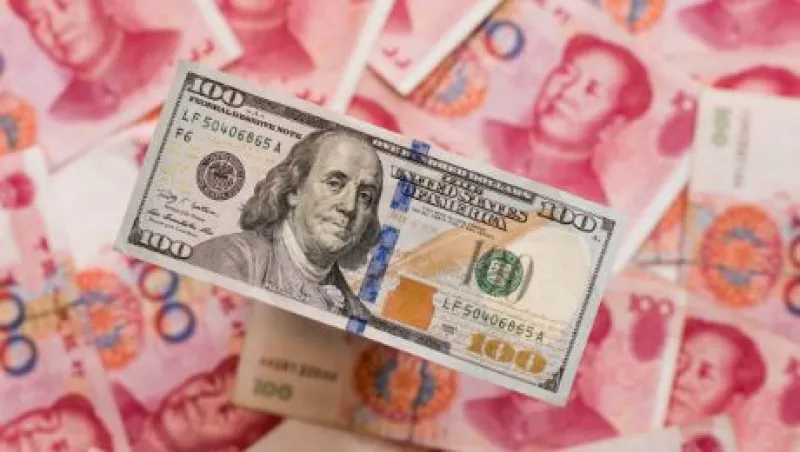
U.S. public pensions maintain a home bias despite America no longer being the guaranteed growth center it once was.
New Institutional Investor survey data reveals a widening divide in where the world’s largest investors see growth opportunity. While U.S. investors continue to favor domestic markets despite constant headline risk and market volatility, overseas allocators, particularly sovereign wealth funds, are increasingly turning to China and Asia more broadly for growth.
At II’s public funds event in Los Angeles last month, 41 percent of attendees revealed that they still find the U.S. the most attractive region in which to invest. This comes even as new research shows allocators looking to invest in other regions as U.S. large caps can no longer guarantee the outsized returns they’ve provided for the past decade.
Meanwhile, only around 17 percent of American pension fund allocators see the Asia-Pacific region (not counting China and India) as place to allocate. Only 10 percent think the EU is the most attractive place to invest.
The U.S. remains the largest pensions market: New research from WTW’s Thinking Ahead Institute estimates that 66 percent of the $68.27 trillion in global pension assets are in the U.S. as of December 31.
One allocator for a midsized city pension said this impulse to keep capital domestic simply stems from a “lack of imagination.”

“Seems to me for all the airs the institutional market puts on, they are still momentum investors at heart,” they said. “The U.S. has been on a tear, and earnings growth is not slowing down. Everyone who has leaned into home country bias has been amply rewarded.”
But this sense of American exceptionalism, however muted these days due to chaotic trade policies and the war in Iran, isn’t shared with large overseas investors. In fact, at II’s greater China global investment forum in Hong Kong (which was also last month), allocators showed a strong preference for investing in China (29 percent), followed by Asia-Pacific ex-China and India (24 percent). Only 21 percent of Asia-based allocators see the U.S. as the hub for growth.
Although China is tied with India as fourth on the list of places American allocators are most enthusiastic about, U.S. investors are still returning to Chinese stocks, which is leading public markets to rally and shares of major Chinese tech firms like Alibaba, Tencent, and Baidu to surge.
Harry Broadman, a former chief of staff of the President’s Council of Economic Advisers, found these results curious.
“If investors are behaving rationally and are privy to the same data, why are there differences in perceptions?” Broadman wondered. “It’s hard to believe people are privy to different data at that macro level. So, is nationality important, are there different perceptions, or both?” He also suggested tensions between the U.S. and China could likely be affecting perceptions.
The city allocator added that China and the U.S. both offer similar opportunities — particularly in tech. And while U.S. investors don’t trust China, and Asian investors don’t trust the U.S., it makes sense they “both invest in their local champions.”
When asked which asset class U.S. public fund investors plan to add to over the next 12 months, 17 percent said infrastructure, followed by hedge funds (15 percent), and developed market equities (13 percent). For attendees of the event in Asia, the top priorities were hedge funds (16 percent), private equity and venture capital (15 percent), and a tie between private credit and infrastructure (both at 13 percent).
SWFs Also Prefer Asia
Sovereign wealth funds also want to invest more in China than any other region. When asked at an event in London which region they consider the most attractive, 26 percent cited China as their top destination for allocating capital, followed by Asia-Pacific ex-China and India and the U.S. (both at 20 percent).
Infrastructure is also the asset class SWFs are considering adding to more than any other asset class, with 20 percent of respondents looking to add to their stable of strategies. After that, it’s a three-way tie with private equity / venture capital, emerging market equities, and private credit at 14 percent.