


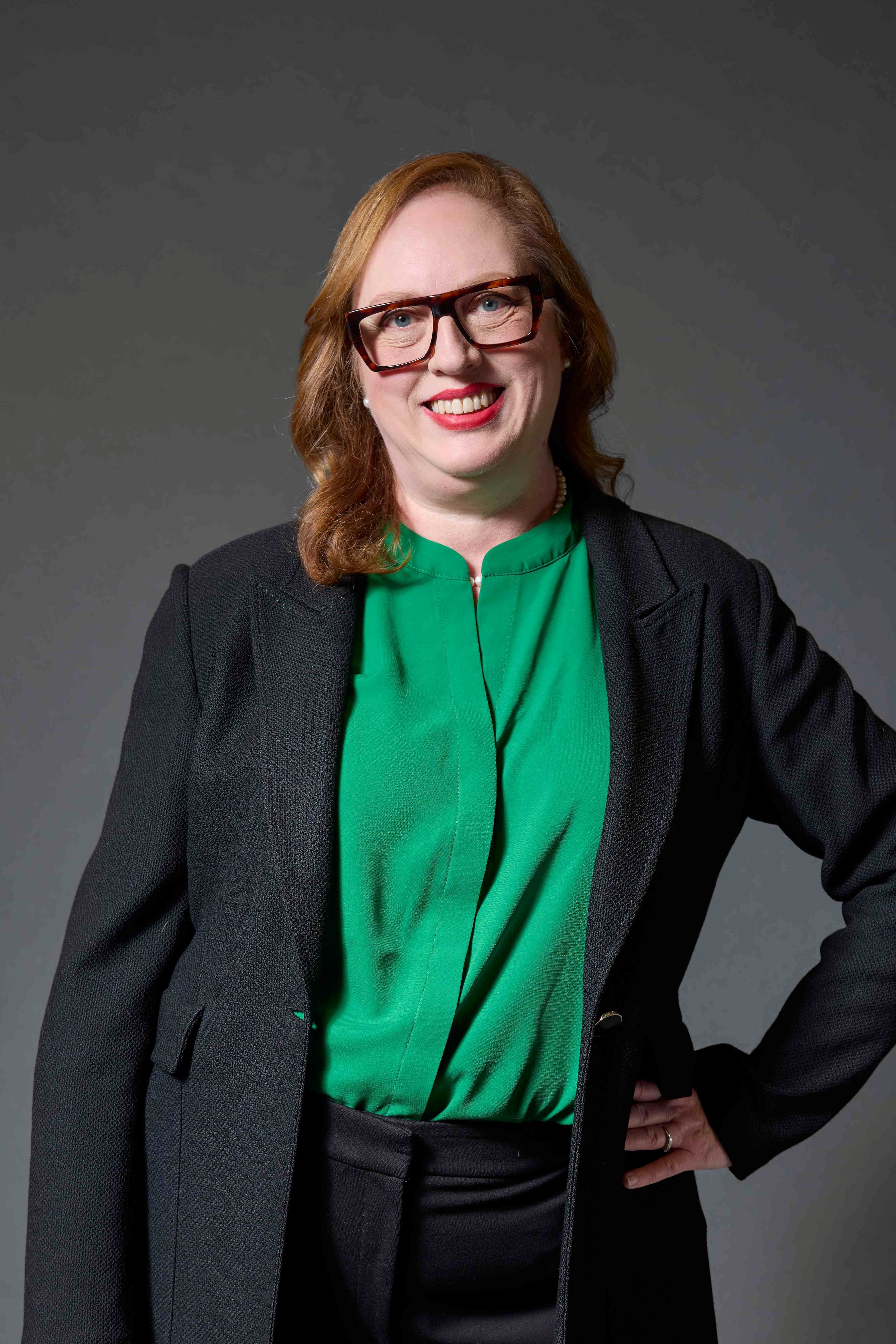
Institutional Investor’s Chief Marketer Institute is recognizing Kristie Nettles, V.P., Managing Director and Head of Global Insurance and Institutional (North America) Marketing at AllianceBernstein, as CMO of the Year. She sat down to discuss her current role, biggest challenges, and view of the future with II’s David Braham, Executive Director, Senior Executive Director, Head of Thought Leadership & Market Intelligence, and Julie Segal, Editor of Institutional Investor Magazine.
Kristie is a career wordsmith. From being a Crime Reporter at The Paris Post-Intelligencer, a small newspaper in Paris, Tennessee, to her previous role as Managing Director, Global Head of Client Marketing Strategy at State Street, she has maintained her focus on the story behind everything the firm does, tailored to its audience and the way they want information delivered.
A graduate of Murray State University, where she received her Bachelor of Science in Journalism, and Simmons University, where she earned a master’s in Communication Management, Kristie has leveraged her love of language to lock into marketing.
She shared with II what controlling the narrative looks like, how her hiring process has evolved, and which three-letter government agency inspired emojis.
 What prompted your move into marketing?
I started as a crime reporter. I’ve always had this fascination with communications: Who tells the story? Who crafts the story?

What got me interested in marketing was how to tell the story of a firm or an organization. I started out doing marketing in the nonprofit world at United Cerebral Palsy of New York City. I was doing digital marketing; I was learning how to code; coding on a text file and uploading it to an AOL dial-in, old school – and I was able to parlay that experience into a role at Marsh & McLennan in its marketing department.
What’s your favorite part of the job?
I come from a long line of storytellers, and I love the challenge of it. It’s not retail marketing: Institutional marketing is its own strategy with its own focus; it’s very relationship-based, with everything moving at the pace that that trust can be built. I like the challenge of weaving a tale that entices people, that your audience will listen to, and that keeps them engaged and interested. If you know your audience and what they respond to – and what they don’t respond to – then you can direct your message to them.
What I learned in journalism school is that there’s always the message, the receiver, and the person communicating it. Your goal is to reduce the amount of static between the communication and the receiver. That’s crafting the story. Think of your own stories: The way you tell a story to your parents is different from the way you’d tell it to your friends; it’s the same story, but you include the details that resonate with your audience.
How much of your work has changed with technology and the different mediums available to tell stories today?
Honestly, the tools have changed less than the audience has. I came up in print — I was learning to code on a text file when the Web was brand new – so I've watched a few of these turns (fax to TV to digital and now AI), but the real change in my work isn't the number of channels; it's that I'm no longer telling one story to one decision-maker.
An institutional decision isn't made by one person: There's the CIO who signs, but there's also the analyst who prepped their brief, the consultant's associate who built the shortlist, and the rising PM who'll be the allocator in five years. They don't all consume the same way (The signer reads the white paper; the person who shaped their opinion heard it on a podcast or caught the short version on their phone), so part of the job now is deciding who around the decision has to hear this and reaching them where they actually are.
That's a bet on the next cycle as much as this one. The people forming their habits on short-form today are the decision-makers in five years, and they'll expect the quick hit and a human voice – a face, not a PDF. You have to think that far out. To me, the fragmentation isn't noise; it's the map of who's influencing the outcome.
The part technology has changed in my work is that I can finally see it. It used to be, you sent the story out and waited to find out who signed; now, I can watch who across that committee is engaging – which title, which firm, how far in – and adjust before the meeting instead of after. That visibility is the real shift. The channels are just where the signal shows up.
Has the industry changed?
It's still mid-shift. A lot of marketers carry a launch-day mindset – pick a date, put out the press release, go live on social, all at once. That model assumes everyone's paying attention on the same Tuesday. In institutional, they're not: The decision runs months, sometimes years, and it's built on trust, so no single moment moves the business.
The work now is sequencing: The website goes live, a spokesperson picks it up a few weeks later, social carries it after that — each layer reaching people at a different point in how they buy. You're always on, and the job is knowing where the person actually is (a client of 10 years, where I'm shifting an existing relationship, or someone meeting us for the first time) – same message, told two different ways, depending on where they sit in our story.
That sequencing only works because trust in institutional is cumulative. It isn't a message you send; it's what's left after you've shown up the same way over and over. An allocator isn't deciding off one campaign; they're reading a pattern: Did the research hold up? Did the person who wrote it sound like they'd actually managed money? Were we consistent from the website to the pitch book to the room?
I think about it less as building trust and more as removing every reason not to trust us: That's changed what we publish. Research used to be the thing you handed over once someone was interested; now, it's the front door — the market outlook, the portfolio-construction piece, the regulatory read — because that's what an allocator uses to size you up months before anyone talks product. You're earning the second visit, then the third – and it's changed where we show up.
LinkedIn is the room now (Allocators, consultants, and the people who brief them are all there, most of them every day), so our always-on paid social lives there, targeted down to the title and the firm – around it, earned media because a placement in the Journal or Barron's is somebody else vouching for you; video and podcasts for the human part, since people trust a face and a voice faster than a paragraph; and precise out-of-home, down to the screens in the elevators of buildings where our prospects work. None of it is the campaign; it's layers, and the trust builds in the overlap.
How are you thinking about AI?
The first question I ask isn't what AI can do: It's what we're willing to let it do. In a regulated business that's a leadership call, not a tools call. If I let IT or compliance draw that line for me, I've handed away the shape of my own function, so I own it – the work we automate, the work that never leaves human hands, and where the guardrail sits in between.
That line matters more here than almost anywhere. In institutional, a wrong output isn't a typo: It's a compliance event and a trust event at once. The whole business rests on an allocator believing what we put in front of them, so AI that's fast and confidently wrong is a reputational risk before it's ever a time-saver.
Validation isn't just overhead; it’s the cost of being allowed to use the tool. Where it earns its place is the work under the work – competitive scans, data pulls, first drafts, the things that used to eat a day – and I've stopped thinking of it as only generative, the thing that makes the deck. The sharper question is what it can do: pull the trends out of Salesforce itself, structure them, hand them back. That frees my team for the part a machine can't reach – which story the audience needs and whether we've earned the right to tell it.
That human piece is the part I care about beyond the day job. I sit on the board of the Just Horizons Alliance, a nonprofit that treats AI ethics as a human-behavior problem rather than a coding one – how these systems actually change the choices people make. That lens sharpens how I read our own tools, and I hold it to the standard I'd hold any investment: It has to show up where I can measure it — faster pipeline, lower cost to produce, hours my people get back for higher-value work. If I can't tie it to the business, it's an experiment, not a capability, so I'm building that fluency across the whole team because the firms that win this won't be the ones with the best tool: They'll be the ones whose people know exactly what to hand it and what to keep.
How do you take a very simplified story and try and distill it in a way that comes out positive?
My job is to operate with integrity — and to make that obvious – so the goal isn't a positive story; it's a credible one. You're talking to people who value assets for a living; they know reality from spin instantly, and the moment they catch spin, the rest of what you say gets discounted. You're talking to people who value assets for a living; they understand instantly the difference between reality and spin, so distilling isn't polishing; it's finding the one true thing that matters and saying it plainly, trade-off included.
If a strategy gives up liquidity for a return premium, I say so: Naming the cost is what makes the benefit believable. Allocators don't trust the manager with no downside; they trust the one who understands their own. Mostly, it's subtraction – cut until you're left with the part that's both true and useful, the sentence a CIO would remember if they only kept one – and I own the claims we won't make as much as the ones we will because in a business where trust is the whole asset, every story is a deposit against the next 20 conversations. "Positive" here isn't the shiniest version. It's the one that holds up.
This piece has been edited for length and clarity.
Market Intelligence Is Independent of the Institutional Investor Magazine Newsroom.