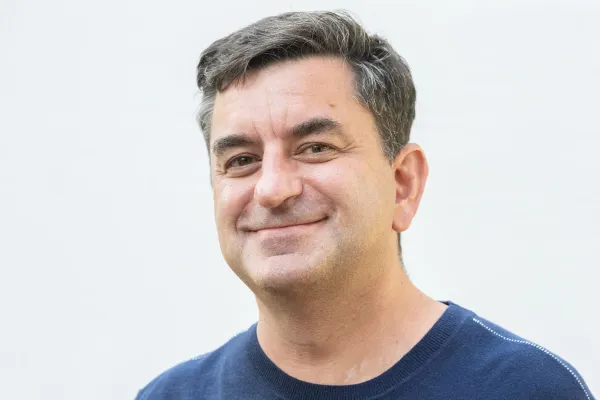
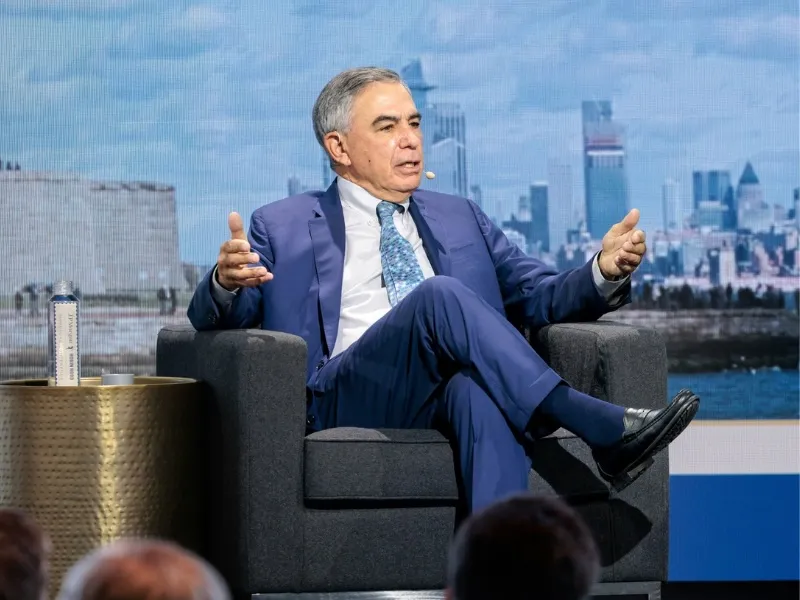
After leaving his position as president of John W. Henry & Co. in 1993, Ken Tropin found himself contemplating his next steps. He met up with Mark Dalton, who at the time was the president of Tudor Investment Corp. — a hedge fund Tropin knew well from years of working on Wall Street — for dinner at an Italian restaurant in Greenwich, Connecticut.
“What are you going to do?” Dalton asked. When Tropin said he didn’t know, Dalton suggested he either come work for Tudor or start his own fund, with Tudor as a strategic partner.
“I was flattered,” Tropin says. Tudor was already one of the biggest names in what was then a small, boutique world of hedge funds. But there was just one problem. Although Tropin had spent years around legendary managers, including Paul Tudor Jones II, Moore Capital’s Louis Bacon, and Bridgewater’s Ray Dalio, he had never traded or built a managed futures system.
“And I said, ‘Well, Mark, I would need to invent trading systems, which I have some ideas about. But I can’t say that I’ve ever coded before,’” Tropin recalls. Soon Jones himself got involved in the conversation. “Paul sort of put it up to me and said, ‘You’re saying you can’t do it?’ And I was like, ‘I didn’t say that.’”
The challenge was on. Tropin hired a consultant to teach him how to code, ultimately developing the trading systems that would become the foundation of his hedge fund, Graham Capital Management.
Many trend-following managed futures firms use systematic momentum trading amped up with leverage, but Tropin designed his systems to begin reducing risk before trends become overextended and reversed. “It was a less volatile way of investing,” he says — and one that he thought would be more appealing to institutional investors, which were still a small part of the hedge fund universe at the time.
Jones was impressed, Tropin remembers: “He took a look at the systems and said, ‘This looks amazing. Let’s go.’”
In July 1994, Graham Capital (Graham is Tropin’s middle name) launched with $25 million from Tudor and $5 million of Tropin’s own money.
“Ken’s background for well over 15 years was in systematic trading in what was still a frontier business at that time,” says Jones, who is still an investor in Graham. “With that much domain expertise, it was a no-brainer to back him. While he did not code per se, he was an expert in risk management and understood all the timing signals.”
In December 1994, Tropin traveled to Geneva with Dalton to meet a few dozen Swiss banking clients of Tudor’s. “And five of them took a chance on me because Paul Jones recommended me,” Tropin says.
Now, 32 years later, many hedge funds of Graham Capital’s generation have either closed, turned into family offices, or faded from prominence. Both Louis Bacon and John Henry left the business, though their funds remain in operation.
But with Tropin still at the helm, Graham Capital seems to be entering a new phase of growth. The firm now oversees $21.9 billion across seven funds. About half are the original trend-following quant strategies. The rest are discretionary macro funds, which the firm began to add in 1998. A bang-up performance in 2022, when the stock market crashed as the Federal Reserve began raising interest rates, got Graham renewed attention at a time when many high-flying hedge funds were posting double-digit losses.
Graham was built for the kind of world that returned in 2022. That year saw a “paradigm shift” in the markets, says Jens Foehrenbach, Graham Capital’s president and chief investment officer, who joined the firm in 2025. “Both equities and bonds sold off. At the time, many people hadn’t seen that in their working life.” These moves gave new life to macro funds — and there weren’t that many left. Three Graham funds gained more than 30 percent that year.
Four years later, Tropin, now 73, shows no signs of slowing down. Graham Capital remains headquartered in a post–Gilded Age granite mansion, the former Rock Ledge estate in Rowayton, Connecticut, where the firm moved in 2004 and built a modern wing to house its traders. More recently, Graham added offices in New York, London, and West Palm Beach, Florida, where Tropin lives during the winter. It has just opened a location in Hong Kong and plans to open an office in Armenia later this year. “There’s a lot of quant talent there,” Tropin says of Armenia.
Graham’s conservative approach stood apart at a time when macro gunslingers were the talk of Wall Street. Tropin believed institutions would ultimately prefer steadier returns, explaining his overall view.
Over the years, his funds have managed high single-digit to low double-digit annual returns while avoiding major drawdowns. Says Tropin: “They come to us because we’re known as having a very strict risk culture and philosophy.”
Tropin’s more than 45 years in finance give the Graham Capital founder the kind of perspective that is in short supply these days. But there’s another wrinkle to his story. “The fact that he didn’t come from finance, maybe that’s his secret sauce,” says Foehrenbach. He suggests it has allowed Tropin to take a “totally fresh look” at problems.
Born in Queens, New York, Tropin has a career arc that is far from the norm for hedge fund managers. His father worked in public relations at the United Nations and his mother spent years helping Eastern European refugees. The elder Tropin also loved English poetry and named his son after Scottish-born British author Kenneth Grahame, who oddly enough financed his writing career by taking a job at the Bank of England.
As Tropin tells the story, his mother had an independent streak. When she was 24, the young Jewish woman went to postwar Germany in 1949 to help refugees in “what were called deportation camps but were really concentration camps,” he says. “That was unheard of for a woman.” She went on to work for several refugee programs, including what is now known as the Intergovernmental Committee for European Migration. “So every night [when I was] a kid growing up, she was at JFK meeting refugees from Eastern Europe,” Tropin recalls.
Having these parents as role models may help explain why Foehrenbach’s first impression when being interviewed by Tropin for the president’s job was that the man was “unusually kind” for a hedge fund founder. “Yes, we want to be successful, but we can do so in a way where it’s still fun to come to work,” he says of Graham’s culture.
Such values are often given short shrift in the world of finance, but they meant a great deal to the potential hire. “I’ve thought about this a lot in my career because I have worked with some challenging individuals,” Foehrenbach says. “The combination of potentially high wealth creation that this industry offers, but then at the same time, the instantaneous feedback function of a live P&L — that creates a lot of pressure and maybe sometimes behaviors which are more challenging to deal with.”
Having been “on the receiving end of sharp elbows” in previous jobs, he says he often wondered, “Do you have to be like this to be successful? I’ve resolutely come to the conclusion: No, you don’t.”
Tropin’s upbringing also created what Dalton calls “fertile ground” for philanthropic work. A longtime friend, Dalton cites Tropin’s involvement in the Robin Hood Foundation, a New York City poverty-fighting nonprofit founded by Jones that Tropin currently chairs.
Dalton, now the co-chairman of Tudor along with Jones, posits that Tropin’s enthusiasm for helping others less fortunate “was probably wired into Ken from a very early age.”
As a young man, Tropin wasn’t thinking about amassing a fortune when he entered college. At 16, he was admitted to Goddard College, a small liberal arts school in Vermont, where he soon discovered he had a “passion” for art.
“Like most 16-year-olds, particularly in that era, I didn’t have a vision about what a career was going to be,” he recalled in an interview with Institutional Investor in his spacious office overlooking the Long Island Sound — a room with a massive stone fireplace and filled with paintings by Armand Guillaumin, Edouard Vuillard, and Charles Camoin. It once served as the living room for the mansion, originally built by U.S. Steel president James A. Farrell. It is now is in the National Register of Historic Places. The mansion’s front door, designed by Philadelphia sculptor Gordon Youlte, features stained-glass panels depicting saints, sinners, and demons in a montage of ancient Celtic iconography.
At Goddard, Tropin focused on sculpture, inspired by the Italian master Alberto Giacometti. He admits that he wasn’t particularly studious. “To say that I applied myself academically until I had to later make a living would be untrue.” His heart was elsewhere. “I was really, really, really passionate about [art], but I wasn’t particularly mindful of [how I was] ever going to make a living doing this.”
The young man returned to Harrison, New York, where his family had moved from Queens when he was ten years old. He set up a successful house painting company. One day a client approached him and said, “You seem like a smart kid. What are you doing?” Tropin told him he was trying to make a living, to which the client, a commodities trader, suggested the “smart kid” check the Sunday New York Times ads for entry-level jobs. “And so that’s what I did,” says Tropin.
“I didn’t go to some Ivy League school, I didn’t study finance,” he notes. “I felt I had to compensate that for that with attitude. So I was the guy that showed up first and left last and always tried to have a smile on the face.”
Tropin started off at a small commodities trading firm out of Chicago called Rosenthal but was quickly hired by Shearson Loeb Rhoades, where he became an account executive. Two Shearson traders, Richard Donchian, a pioneer of the systematic trend-following school of investing, and Barbara Dixon, his protégée, offered their strategies to clients. Tropin’s work there led to a 1982 recruitment offer from Dean Witter, where Tropin ran the managed futures business and was responsible for selecting outside commodity trading advisors to manage client assets. He also ran an internal CTA program.
As he got to know the powerhouses, Tropin co-founded the Managed Futures Traders Association. Financial futures were in their infancy, creating a new market. “There was an element of working with regulators and an element of, hey, how do we all get together and be the best traders we can be and have fun doing it? It was early days,” he says. The group evolved into the Managed Funds Association and has become a powerful lobbying group in Washington.
After seven years at Dean Witter, Tropin was hired away by John Henry, who was a client, to run his firm. Tropin moved it from Newport Beach, California, to Connecticut, where the hedge fund world was gravitating at the time. But, according to Dalton, working with Henry was a challenge.
“Ken had an iron stomach dealing with the volatility over at John W. Henry. Just watching it from afar, it was like, oh, my God, I can’t believe they can have that kind of volatility in their models,” Dalton says. Tropin “made a choice. He said, ‘I want better risk management. I want more research that leads to more diversification, that leads to a better product for investors.’”
As a new hedge fund manager, Tropin had to start from scratch. “The biggest surprise to me is that the guy had the intellect and the determination to teach himself how to program,” says Dalton. “He basically built the engine. He just didn’t build everything around the engine. He built the trading model engine.”
The systems ultimately created for Graham were designed to avoid the extremes. He says that strategy led Graham to make some important calls early on. In 1997, when Asian markets sold off, Graham was short those markets, and when the tech bubble burst in 2000, Tropin notes, “we got that right.” Then in 2008, during the market crash, “we were short stocks by the third quarter and long bonds, and that was the right trade to have on.”
Between 1994 and 1998, Graham focused solely on computerized trading. But Jones, a discretionary macro trader, suggested the firm diversify into discretionary trading because trend trading was “episodic, either good or not so good,” Tropin says. That shift allowed Graham to find a complementary source of alpha.
In 1999, Graham launched a fund it dubbed Proprietary Matrix, which is now half quant trading and half discretionary. And by 2005, it had launched an entirely discretionary macro absolute return fund that now is its largest, with $4.38 billion. Its tactical trend-following fund is the second biggest, with $4.07 billion as of August.
The ability to grow and transform the firm over the years is one of Tropin’s strengths, according to investors. “He is and was a great business builder,” says Jones. But Graham is still close to its roots. The risk is about 75 percent macro, and it also has long-short equity traders, quant equity traders, and teams trading credit and convertibles. “Graham is more than just a macro fund, but the majority of our risk remains macro,” Tropin says.
Macro is hot these days, in stark contrast to several years following the financial crisis of 2008. As Tropin explains, monetary policy at the European Central Bank, the Bank of England, and the Federal Reserve was essentially on hold from 2010 until 2020. “And so there was a ten-year period where there were only 22 rate changes of 25 basis points.”
That stability may have helped calm the banking system after the financial crash of 2008, but it didn’t offer much action for macro traders. Since 2022, “I think there have been something like 82 rate changes of 25 basis points or more,” says Tropin. “You don’t want so much volatility that it is a roller coaster that you’re going to get thrown out of. But you want to have enough movement that there’s opportunity.”
This year is testing that thesis. “Geopolitical risks are unlike any I’ve seen, and I’ve been around a long time,” Tropin says. So far, he notes, 2026 has been a solid year for quantitative macro funds, as the price of gold, equities, and energy all rose and “managers like us on the quantitative side were able to take advantage of some of those moves.” Graham’s tactical trend fund is up 21.58 percent this year through June.
But discretionary trading has been more difficult, Tropin explains. “All of a sudden, inflation started getting priced into the markets, and it was unknowable how far energy prices would go up.” The Proprietary Matrix fund has gained 4 percent in 2026 through June, but Absolute Return has added less than 1 percent. (March was particularly tough, when both funds fell more than 6 percent.)
When asked how Graham positions itself these days, Tropin answers with one word: “Cautiously.”
“You have to stay tuned in, and you have to stay cautious, and you have to stay open-minded. And you can’t get married to a position right now,” he says. Speaking with II in late June, Tropin mentioned the status of the U.S.-Iran war: Although it seemed the momentum was toward a deal happening soon, he wasn’t “100 percent sure” that would be the case. Given the back-and-forth of hostilities since then, his skepticism was warranted.
Figuring out the equity market is also dicey. “You could simply just have things be too expensive for it to make economic sense, and you get a bit of a correction,” Tropin says. “On the other hand, you can have prices continue to go up because there’s so much momentum, and that’s one of the most powerful factors that a trader can look at.”
Whatever the challenges, Jones says of Tropin, “he never gets flustered.”
A daily risk management meeting, something Graham instituted in 2007, is key to keeping the firm on an even keel in uncertain times. Its importance can’t be overestimated, according to Foehrenbach.Tropin doesn’t trade himself, but he, Foehrenbach, and the investment committee are very close to the portfolio managers who run their strategies, and an investment and risk committee oversees and allocates capital.
“When the market is volatile, what you want is your entire mental capacity being focused on your exposures, your markets, your risks in the P&L,” says Foehrenbach, who previously spent 17 years at Man Group. “What you don’t want is to scramble: Where are we meeting? What time? Who is saying what? What are the unwritten rules in a committee?”
The process speaks to Tropin’s early attitude of going beyond what is required at work. With his age and stature, Graham could take a backseat, says Thomas Feng, Grahman’s CIO of quant strategies. Still, he says, “Ken remains highly engaged in day‑to‑day operations: He attends daily risk committee meetings, frequently checks in on model development, and continues to push for improvements in profit‑taking and AI adoption.”
When Feng joined the firm in 2009, Tropin’s original code was no longer running in its initial form, but it was still visible. Though the models detect trends in market prices, Feng explains, they must be continually improved when they miss trends or misidentify false trends. The profit-taking logic in Tropin’s original code has been actively researched and extended to other strategies, including macro fundamental models that trade on economic growth and inflation.
Feng, who studied math at Yale and has a PhD in algebraic geometry from Princeton, says that Tropin’s “market intuition,” married with a respect for quants, is the combination that fuels the success of the models. “He knows the power of math. So basically, a lot of times what I end up doing in my role is Ken will give me an idea based on market intuition, and it’s my job to interpret it in a form of a certain math framework.”
Combining the discretionary side of investing with the quant business perhaps sounds easier than it is. “I’ve worked at other financial institutions where arguably the lead person in charge may have come from a discretionary macro trading background,” Feng says. “They tend to trust their intuition so much that they will totally discount the math. Ken is not like that.”
At the same time, Tropin doesn’t get bowled over by the math. “He’s good at identifying which people truly know what they’re talking about” without being intimidated by complex math or accepting “BS,” says Feng.
Tropin’s background in the liberal arts versus a purely technical math and finance one — along with the ability to merge the two realms — has created what Mario Thierren, who heads up alternatives investing at Caisse de dépôt et placement du Québec, refers to as “cognitive diversity.” Thierren believes that as AI learns to perform technical skills, such attributes will become more critical. (With regard to AI, Graham continues to invest in technology and quants, and has been ahead of the curve in many respects. Twelve years ago, the firm invested in natural language processing, the precursor to today’s large language models.)
Graham is one of the largest investments among the $15 billion Caisse has invested in hedge funds. “For us, stability is really important,” Thierren explains. Graham’s “strategy is exactly in the middle of the fairway,” he adds.
Says Tropin: “That is the key to survival in our business.”