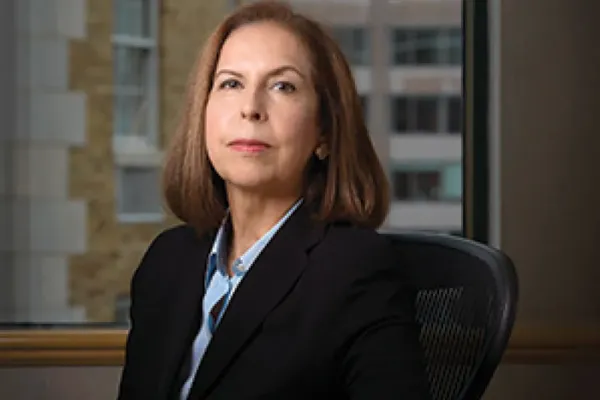

The Committee on Investment of Employee Benefits Assets (CIEBA) celebrated its 40th Anniversary this year. Since 2017, Executive Director Dennis Simmons has represented the interests of the 118 corporate pension plan members of the non-profit organization. “My responsibilities,” explains Simmons, “center on bringing together CIEBA’s seasoned fiduciary leaders to compare notes, shape industry collaboration and champion issues on behalf of millions of participants.”
Based in Washington, DC, where national pension legislation is decided, CIEBA plays a crucial role in influencing policy. They have been at the heart of major legislative debates, such as the Pension Protection Act and the DOL Fiduciary Rule. Simmons shares what the organization is focused on today, “We’re involved in a lot of discussions on litigation reform, but the biggest practical issue we are tackling is providing employers with more flexible ways to use pension surpluses on behalf of participants.”
The booming market over the past few years, combined with effective fiduciary investment management, has significantly boosted pension plan funding levels. As a result, many chief investment officers now are managing a surplus within their plans. Much of that cash could be used to fund other participant benefits, however, as Simmons explains, that is proving to be a challenge, “The current law is restrictive when it comes to surpluses. Oftentimes, the only way to put surplus funds to use for other benefits would be for the plan sponsor to terminate the plan altogether, which really hurts employees and employers. So, we’re working with Congress to improve flexibility to use surpluses to fund other benefits, while still protecting participants.”
Simmons also noted another big policy issue on the plate is litigation reform. Over the past 15 years, plan sponsors have been assailed with an exponential rise in ERISA lawsuits, many of which Simmons explains are frivolous. “These suits get very costly, even if there is little or no merit to the allegation.” As Simmons explains, “Plaintiffs tend to shop around for a judge or court they think will have the lowest bar to move a case to discovery. Once discovery kicks in, the sponsor faces significant legal costs, even if there’s been no real credible claim of wrongdoing.” CIEBA has been trying to support sponsors willing to fight these lawsuits, partly because, as Simmons points out, “the suits have created headwinds for employers who may simply throw up their hands and say ‘why should I keep voluntarily sponsoring a plan for my employees? I’ll just give them current cash and let them handle their own retirement.’ That’s obviously not a good trend.”
CIEBA has helped make some breakthroughs in influencing the tenor of the litigation debate, and Simmons mentioned a positive development has been the DOL filing friend-of-the-court briefs on behalf of plan sponsors in recent cases. Still, Simmons believes “more is needed in this area if the 401(k) system is expected to continue to innovate and provide successful outcomes for employees.”

Another key area that plans have on their radar is the shift toward the OCIO model. The debate over keeping investments in-house versus outsourcing is a perennial conversation for employers. The decision to go the OCIO route is typically justified internally by promised immediate cost savings or fee waivers, combined with reduced fiduciary responsibility for the employer. However, Simmons is not convinced that OCIO is suitable for all plans, particularly larger plans. “An employer can’t fully outsource responsibility. They will always have ongoing selection and monitoring responsibilities. That can be challenging, especially if the OCIO is investing in their own affiliated products. So, an independent, efficient in-house fiduciary team often provides a huge layer of protection for the sponsor. It’s one of the reasons several employers in the past decade have tried an OCIO and reverted back to in-house management.”
Simmons adds another reason for keeping the plan in-house, “Most of our members have both defined benefit and defined contribution plans and they can look at both plans in tandem. It’s a huge plus to have a fiduciary who swipes the employee badge every day and can look after all aspects of the employer’s efforts to help employees save for retirement.”
Simmons sees litigation reform as the absolute key to unblocking the path to new and innovative retirement solutions. “We really don't see anything happening until sponsors feel comfortable enough to dip their toes in the water. But with the specter of litigation hanging over them, the risk of being in the headlines is simply not worth it.” He adds, “Adding innovative programs like more alternative investments in DC plans could be very positive for participants in the long run. However, plan sponsors simply aren't in a position to realistically talk about the merits of these programs at the investment committee table. Not yet, at least.”
If you want to find out more about the work that CIEBA is doing on behalf of corporate pension plans, you can register for the annual Institutional Investor Corporate Funds & Insurance Portfolios Roundtable (Event - Corporate Funds & Insurance Portfolios Roundtable), taking place on March 10-11 in Washington, DC.
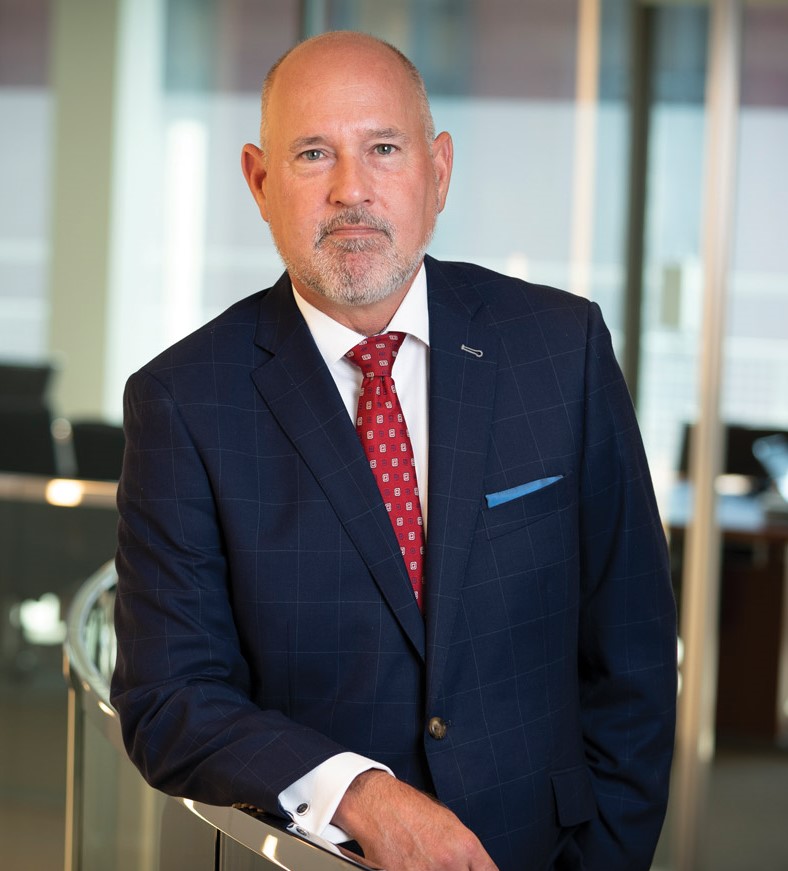
Dennis Simmons is the Executive Director for CIEBA, the Committee on Investment of Employee Benefit Assets.
Prior to joining CIEBA in 2017, Dennis was a senior Principal with Vanguard, working with the Malvern, Pennsylvania-based investment firm for over 20 years. At Vanguard, Dennis served in many policy-making and leadership roles, including heading Vanguard’s retirement savings legal and government policy efforts for the Vanguard International Division, heading Vanguard’s ERISA Legal and Fiduciary Services Group, and the Vanguard Strategic Retirement Consulting Group. Dennis also served as lead counsel on several employee benefits committees responsible for the design and administration of Vanguard’s global retirement and health and welfare programs.
Author, David Grana is the Director of Content at Institutional Investor.
Market Intelligence Is Independent of the Institutional Investor Magazine Newsroom.