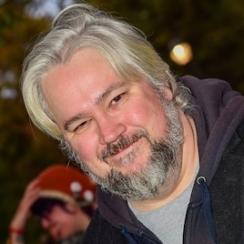

While most endowments and foundations are working to ensure they have ample liquidity, The Dietrich Foundation is taking the opposite approach. Roughly 90 percent of its $1.6 billion portfolio is allocated to venture capital and private equity — and only 2 percent is in cash.
“We don’t have a great need for liquidity. But that’s by design,” Ed Grefenstette, CEO and CIO of The Dietrich Foundation, told Institutional Investor.
So how has it managed to maintain such a highly concentrated portfolio — all while managing to consistently pay its distributions without yet having to rely on its line of credit? According to Grefenstette, founder Bill Dietrich structured the fund to allow the CIO to make bolder bets by forgoing a traditional investment committee.
Under Dietrich’s structure, rather than answer to a separate investment committee, Grefenstette meets three times a year with the foundation’s entire board of trustees. This nine-person board — which includes the CIO and representatives from the foundation’s beneficiary organizations — gives Grefenstette full discretion to invest the portfolio’s assets, operating under a tacit agreement not to interfere with investment decisions or make recommendations. Most boards, which have fiduciary responsibility for the fund, set investment policy, oversee the portfolio’s strategy, and give some level of discretion to investment staff. Full discretion is rare.
The Dietrich Foundation was formed and funded the year Dietrich died in 2011 with proceeds from the sale of the Dietrich family business — assets that had grown from $170 million in 1996 to roughly $525 million by the time the foundation was established. Dietrich hand‑picked Grefenstette to serve as the foundation’s first president, CEO, and CIO.
“Bill said investment committees should always be an odd number and three is too big,” the former treasurer and CIO for Carnegie Mellon University said of his late friend and mentor.

Grefenstette shared Dietrich’s view that investment committees more often than not quash opportunities due to headline risk or a lack of understanding of a complex investment. This can lead CIOs to be less opportunistic with their idea and take fewer risks.
As he explained it, with a more traditional endowment or foundation, the investment committee would review the policy statement and modify the ranges and put limits on what the CIO can do.
“You wouldn’t be so bold in themes if you had to report to an investment committee," Grefenstette said, adding: “Career-risk aversion among CIOs is real — and it has a hidden cost.”
Dietrich also made the foundation a Type I supporting organization, requiring an annual distribution of only 3 percent instead of the usual 5 percent. He also established a static list of 15 beneficiary organizations — primarily Western Pennsylvania educational institutions like Carnegie Mellon and the University of Pittsburgh — with fixed grants. Finally, its mature private equity portfolio is backed by an undrawn line of credit.
“Liquidity Isn’t Free”
While many investors say they invest in illiquid strategies to earn a potential premium for locking up their money, Grefenstette likes to turn that concept on its head. “Most institutional investors are too liquid — and liquidity isn’t free,” he said.
When allocators invest in a public security, they get an option to cash out at any time. But nothing is free, and there’s a price for that option to liquidate.
“When I invest in public securities, I’m willingly accepting a lower expected return as the cost of that embedded option,” Grefenstette said. “Therefore, I should be as illiquid as possible.”
Grefenstette admitted this investment model is an experiment that the board could end any time it sees fit. He also conceded that not all foundations should follow Dietrich’s model — certainly not university endowments that need cash for higher distributions. But so far, the CIO said its investments’ distributions have been superlative, leaving the foundation with plenty of liquidity — and no need for its line of credit.