
| < Back to All-Japan Hall of Fame | |||||||||||||||||||
| Nobuyuki Saji Economics First appearance: 1997 No. of total appearances: 16 No. of first-place appearances: 12 Nobuyuki Saji is something of a rarity among economists: He doesn’t limit himself to developing macro views but also considers the Japanese economy from a micro perspective. He meets with company managements and tours factory floors — in Japan and across Asia — and he doesn’t shy away from making specific stock recommendations. “His style is quite uncommon among economists in Japan,” one client told Institutional Investor in 2008. Saji is also known for speaking his mind. “This country will collapse,” he warns, if Japan fails to open itself up to foreign companies. Japan has more to gain from deregulation than any other developed nation, he insists, yet he is less than convinced that the stimulus policies of new Prime Minister Shinzo Abe will provide the cure for Japan’s ailing economy (recent stock market gains notwithstanding). His current outlook is among the most bearish: Saji anticipates real gross domestic product growth of only 1 percent is fiscal 2013, which began this month, and just 0.8 percent the next year. The 54-year-old began his career as a technical analyst at Nikko Securities in 1982 after earning a bachelor’s degree in economics at Tokyo’s Kwansei Gakuin University. Five years later he moved up to senior economist, and in 1997 made his first appearance on Institutional Investor’s All-Japan Research Team, as a runner-up in Economics. He finished in first place for the first time in 2002, following his move to Mizuho Securities, and has been on top ever since, not even slipping in 2006 when he moved to Mitsubishi UFJ Securities Co. (now Mitsubishi UFJ Morgan Stanley Securities Co.). Saji’s caution these days might appear to be an attempt to “take away the punch bowl just as the party gets going,” as former U.S. Federal Reserve Board chairman William McChesney Martin Jr. once famously quipped the Fed must do. To ease rising foreign exchange fervor, Saji has been warning since January that investors and policymakers may be overstating the benefits of Japan’s weakening currency — and failing to consider the long-term negative consequences. Acknowledging in a note to clients that month that “a weaker yen would be positive for the earnings of Japanese companies,” the Tokyo-based economist cautioned that “we must not overlook the fact that a weaker yen will raise the prices of everyday necessities and thus lower the real incomes of the Japanese people.” Consumers can cut back only so far, he added, before household savings rates turn negative — something that hasn’t happened in Japan since the mid-1970s. However, Saji readily concedes he has sometimes been too negative. Back in 1985, when Japanese leaders joined their counterparts from France, the U.K., the U.S. and West Germany at a hotel in New York to devise a plan to depreciate the dollar against the yen and the deutsche mark — the so-called Plaza Accord — the economist recalls having been “shocked” by the agreement, believing it signaled the end of Japanese manufacturing. That didn’t happen, of course. Japan remains one of the world’s largest producers of automobiles, computer chips and processed foods, among many other products. — Henry Scott Stokes | 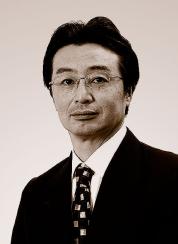
| ||||||||||||||||||
All-Japan Hall of Fame - Nobuyuki Saji
April 8, 2013