Elizabeth Hui, CME Group
At a Glance:
- The 2026 Iran conflict and closure of the Strait of Hormuz have forced global buyers to seek alternative supplies, positioning the U.S. as a primary refined product supplier to the Atlantic Basin, Europe and Asia.
- U.S. refiners ramped utilization to 97.2% and pushed distillate exports to a record 1.9 million barrels per day, while domestic inventories are 13% below the five-year average ahead of winter heating demand.
Spring of 2026 delivered a historic shock to global energy markets. The escalation of the Iran conflict and the closure of the Strait of Hormuz triggered one of the most severe supply disruptions seen in modern history, redrawing global trade flows for refined products. To bridge the shortfall, the U.S. rapidly expanded its role, becoming a primary supplier of refined products for the Atlantic Basin and beyond.
Middle East Disruptions
Prior to the conflict, the Strait handled approximately 20 million barrels per day of crude and petroleum products. Gulf producers exported roughly 3.3 million barrels per day of refined products and 1.5 million barrels per day of liquefied petroleum gas (LPG). With much of this volume delayed or offline, international buyers have been forced to secure alternative supplies to bridge the gap.
U.S. refinery utilization rates have ramped up, reaching 98%, its highest level since 2018, in the week that ended on August 28, 2026, compared to 94.3% in August 2025. Tensions with Iran have led to an increase in demand for U.S. supply, highlighting the acceleration in U.S. exports of middle distillates, such as diesel and jet fuel. This has prompted refiners to step in, covering massive global shortfalls.
Distillate fuel exports reached a record high of 1.9 million barrels per day in early August 2026, surpassing the previous record set earlier in May. Meanwhile, U.S. distillate inventories were sitting at 107.9 million barrels, placing them 13% below the five-year average. These reduced inventory levels have contributed to an increase in refining margins.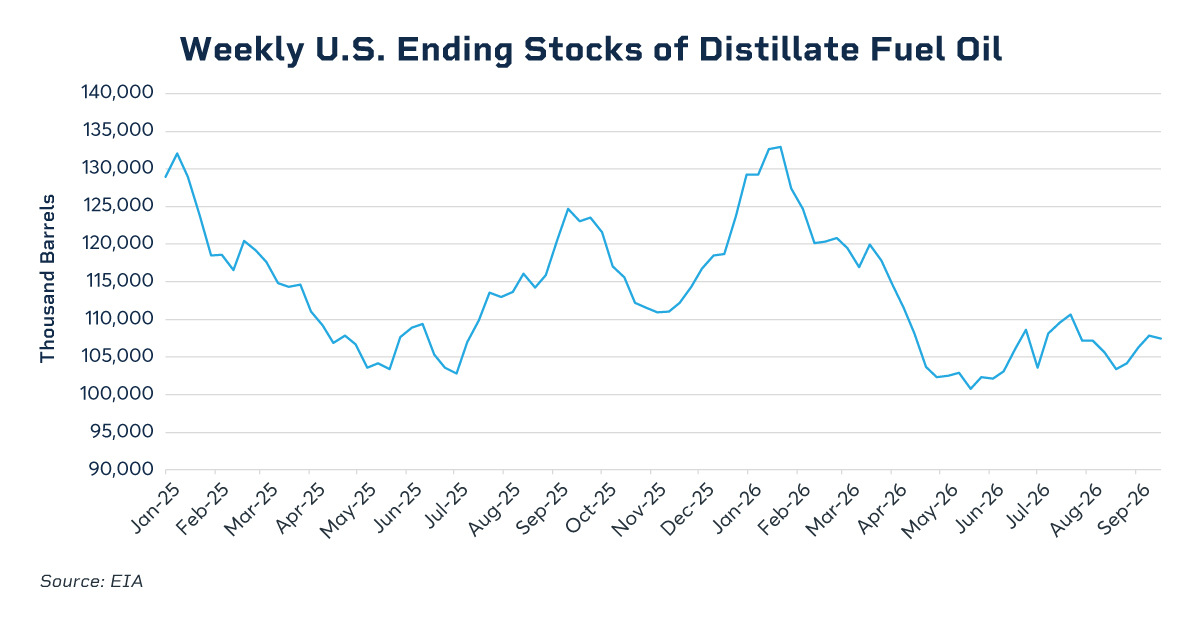

The Ripple Effect
Global distillate fuel supplies are constrained due to lost production from refineries in the Middle East, Russia and China. This reduction has driven up international prices, leading to increasing costs of importing diesel to the U.S. and the demand for U.S. diesel exports.
Targeted Ukrainian drone strikes on Russian refineries have severely curtailed the country's oil infrastructure, eroding its 6.5 million barrels per day of refining capacity. Refinery throughput in June plunged 30% year-over-year to a two-decade low of 3.8 million barrels per day, according to the International Energy Agency. With gasoline and diesel output decreasing 20% and nearly 30% respectively from 2025, the government has turned to fuel export restrictions to safeguard domestic supplies.
U.S. retail diesel prices soared to $6.53 per gallon in the week ending September 21, 2026, compared to $3.75 per gallon the year prior. The diesel crack spread, which represents the price of New York Harbor ultra-low-sulfur diesel minus the price of crude oil, reached a record surging past $100 per barrel. This significant margin has prompted refiners to prioritize middle distillate production over gasoline output.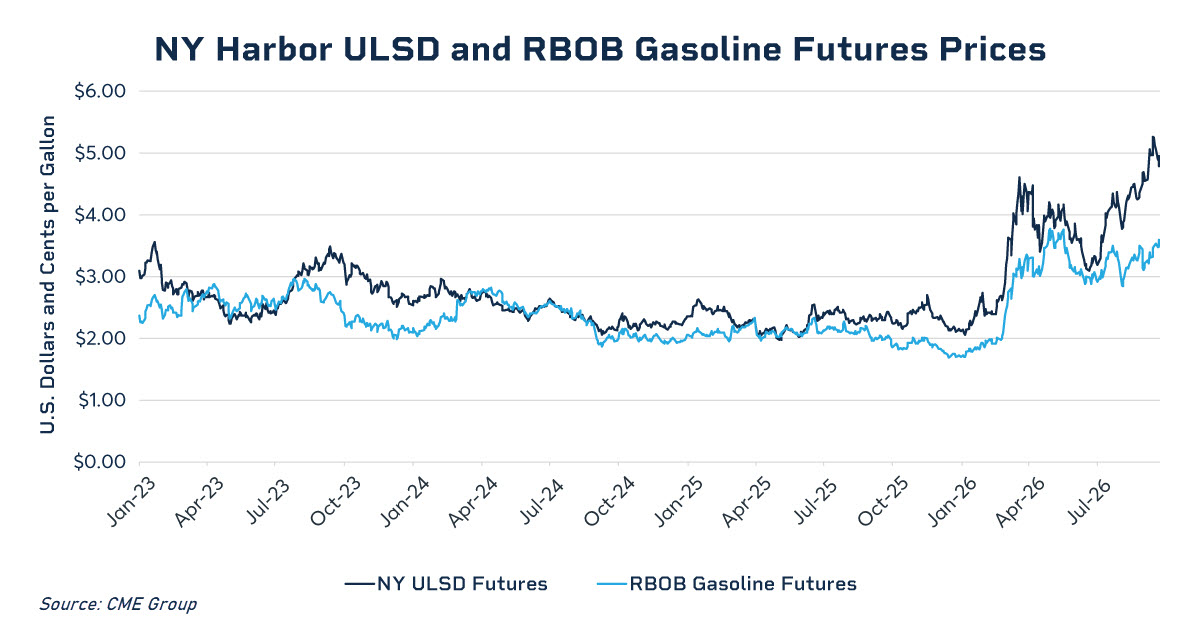
This demand shock is being felt far beyond the energy sector. Because diesel powers the global economy, these price spikes directly impact commercial participants across agriculture, construction and retail. Farming operations face soaring fuel costs during the harvest season, while trucking and freight companies will likely have no choice but to pass these expenses on to consumers. With winter quickly approaching across the U.S. Northeast and Europe, the seasonal surge in heating oil demand will directly compete with these sectors for the same limited supply of middle distillates.
The Trump administration has sought to increase the nation's fuel-making capacity and is reportedly considering a 90-day ban on diesel exports. The potential proposal has sparked debate, drawing pushback from the energy industry, with the November midterm elections around the corner.
Redrawn Destinations
Historically, Latin America has been the primary destination for U.S. refined product exports. While Mexico, Chile and Brazil continue to absorb substantial volumes of gasoline and diesel to meet domestic consumption, current supply constraints are forcing a wider distribution. Both Europe and Asia have increased their diesel imports from the U.S. According to Vortexa data, U.S. diesel exports to Europe more than doubled in early 2026, increasing from 167,000 barrels per day to 396,000 barrels per day, surpassing South America as the largest buyer at certain times.
Looking Ahead
Until the logistical backlog clears, the U.S. will remain a crucial supplier to international buyers. Diesel prices are expected to remain elevated as the winter heating season approaches, driven by increased demand for heating fuels and historically tight inventories.
CME Group futures are not suitable for all investors and involve the risk of loss. Full disclaimer. Copyright © 2026 CME Group Inc.