You dedicate your time and expertise to a nonprofit you care deeply about—whether in a paid role or as a volunteer. Your nonprofit is working hard to make a difference, and in that pursuit, every dollar counts. Your mission aims to have a significant impact—and even if resources are limited, you can realistically think “big” when it comes to services and solutions that might help your organization flourish.
The institutional-level service, support, and investment strategies provided by large asset management firms at the institutional level can also be available to your nonprofit. It is possible that a dedicated outsourced chief investment officer (OCIO) team can effectively leverage its organization’s size and resources to your benefit–and provide tailored solutions and high-touch service to match your nonprofit’s unique needs.
OCIO services are offered by many asset managers, but at Fidelity, we take a thoughtful and fee-efficient approach to providing the “size advantage” to our nonprofit partners by focusing on these key areas for you.
1. Investment portfolios built specifically for nonprofits: Endowments and foundations deserve thoughtful portfolios constructed with their needs considered, including their unique time horizons. Every nonprofit should have access to portfolios that align with their priorities, whether that means targeting strong returns, ensuring liquidity for day-to-day needs, supporting spending policies, or managing risk.
In-depth insights by a team that lives and breathes nonprofits, and proprietary investment research that is driven to help ensure your portfolio exposures are continuously leading-edge and responsive to market conditions.
2. Institutional pricing: You can access cost efficiencies typically reserved for large organizations. In our view, OCIO fees should be modest relative to the value delivered. According to Cerulli Associates' “U.S. Outsourced Chief Investment Officer Function 2025” survey,1 about 76% of nonprofits with assets between $51 and $100 million pay advisory fees in the range of 11 to 30 basis points. An additional 18% of organizations in this asset tier pay less than 10 basis points.
3. Governance support: OCIOs function as co-fiduciaries, with daily oversight of portfolio risks. As such, our investment team can make timely decisions, helping avoid delays that are common with volunteer committees. The investment committee and board remain fiduciaries, but their role shifts to strategic oversight and less tactical day-to-day responsibilities.

4. Investment policy reviews: OCIOs help nonprofits craft their investment policy statement and strategic asset allocations, which serve as the blueprints to the investment portfolio. We also collaborate with our nonprofit clients to review their investment policy statement annually.
Ancillary services: Beyond traditional investment management, many OCIO providers deliver a broad suite of services designed to support nonprofits in fulfilling their missions. These offerings can include custody, cash management, banking solutions, grants management, sub-accounting, and philanthropic consulting, among others. Collectively, these philanthropic support services help nonprofit organizations enhance their impact by strengthening key areas such as strategic planning, governance, and long‑term organizational sustainability.
Learn more about Fidelity’s Outsourced CIO Solutions.
Please visit Fidelity’s Communities on Alternative Investments.
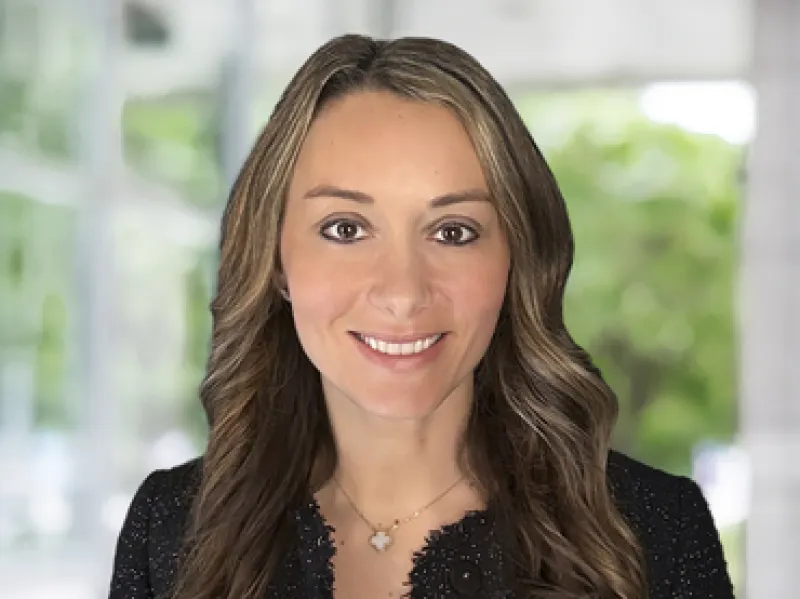
Danielle Frissell is a senior vice president of the endowments & foundations business in the Institutional Client Group at Fidelity Institutional®. Fidelity Institutional is a division of Fidelity Investments that offers investment insights, strategies, and solutions to institutional investors. In this role, Ms. Frissell is responsible for new business development and relationship management activities with endowments, foundations, and non-profit institutions.
1. Cerulli Associates. “U.S. Outsourced Chief Investment Officer Function 2025. Growth Drivers Shaping the Future of the Industry.” https://www.cerulli.com@
Unless otherwise expressly disclosed to you in writing, the information provided in this material is for educational purposes only. Any viewpoints expressed by Fidelity are not intended to be used as a primary basis for your investment decisions and are based on facts and circumstances at the point in time they are made and are not particular to you. Accordingly, nothing in this material constitutes impartial investment advice or advice in a fiduciary capacity, as defined or under the Employee Retirement Income Security Act of 1974 or the Internal Revenue Code of 1986, both as amended. Fidelity and its representatives may have a conflict of interest in the products or services mentioned in this material because they have a financial interest in the products or services and may receive compensation, directly or indirectly, in connection with the management, distribution, and/or servicing of these products or services, including Fidelity funds, certain third-party funds and products, and certain investment services. Before making any investment decisions, you should take into account all of the particular facts and circumstances of your or your client’s individual situation and reach out to an investment professional, if applicable.
Fidelity Investments is an independent company, unaffiliated with Institutional Investor LLC. There is no form of legal partnership, agency affiliation, or similar relationship between your financial advisor and Fidelity Investments, nor is such a relationship created or implied by the information herein. Fidelity Investments is a registered service mark of FMR LLC.
Fidelity Investments® provides investment products through Fidelity Distributors Company LLC; clearing, custody, or other brokerage services through National Financial Services LLC or Fidelity Brokerage Services LLC, Members NYSE, SIPC.
Institutional asset management is provided by FIAM LLC and Fidelity Institutional Asset Management Trust Company.
1247305.2.0