
Nick Liolis came to an uncomfortable conclusion after taking over Guardian Life’s investment portfolio. Even with roughly $85 billion in assets, the insurer was losing ground.
As asset managers consolidated, Liolis believed Guardian faced a choice. It could continue trying to build a traditional in-house investment organization, competing for talent and directly originated deals against much larger firms. Or it could rethink the model, particularly as scale in asset management began to move beyond what a firm this size could realistically replicate.
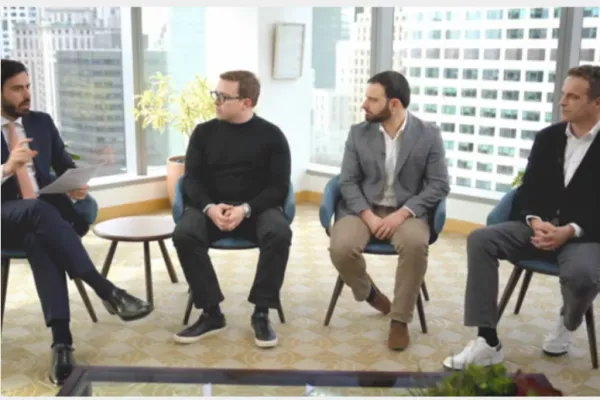
Liolis describes insurers as operating on a kind of “maturity spectrum,” where firms historically built larger internal investment operations as they grew, eventually even taking on outside clients. But the rapid consolidation of asset management, he argued, was starting to push some firms in the opposite direction, said Liolis on In Conversation with Julie Segal.
One reason his proposal gained traction internally was that private equity firms like Apollo, Blackstone, and Sixth Street had already demonstrated just how valuable insurance assets had become. If outside asset managers could generate enormous profits from buying or taking stakes in insurance companies and then managing at least part of their portfolios, Guardian should be able to participate more directly in those economics itself.
That points to a simple change: insurers want more than just help managing money — they want a bigger share of what it earns.
(Listen to the full conversation on Spotify, Apple Podcasts or by scrolling to the end of this article.)

Guardian ultimately struck deals with HPS Investment Partners, Janus Henderson, and Hamilton Lane. The firms hired Guardian employees directly to manage strategies at lower cost while Guardian negotiated upside either through equity or revenue-sharing agreements when it seeded new funds. Taken together, the model lowered costs — in some cases to the point where they could effectively turn negative once equity and revenue sharing upside is included.
The tradeoff is straightforward: Guardian reduces the need to support large internal investment teams, but transfers more of the execution to external firms that it manages rather than control directly. The insurance company kept 30 people to oversee core decisions around asset allocation, risk, and liabilities in-house.
Liolis likes to joke that when he tells people at cocktail parties that roughly 30 people oversee tens of billions of dollars at Guardian, “they drop their drink.”
Executing the partnerships was not simple. Teams moved, reporting structures changed, and Guardian had to negotiate what would happen if relationships deteriorated over time. Liolis acknowledged that restructuring the organization created uncertainty internally, even as Guardian tried to remain transparent with employees throughout the process.
It was not unlike asking a significant other to sign a prenup, Liolis said, because the contracts had to contemplate “what happens if we hate each other.”
Listen to the entire conversation where we also cover private credit — and the CIO's take on the current anxiety. Along the way, Nick pushes back on some common assumptions, acknowledges real risks, and raises the psychological issue around a lack of transparency — when investors don’t have perfect information, they tend to fill in the gaps with worst-case scenarios.
Follow In Conversation with Julie Segal on Spotify or on Apple Podcasts.
About
In Conversation with Julie Segal is a dialogue between Julie Segal, editor of Institutional Investor Magazine, with the people who have shaped and continue to influence the world of institutional investors. The podcast features both familiar names talking about new ideas and upstarts who want to do things differently.
Note: Interviews are editorially independent from our sponsors.