
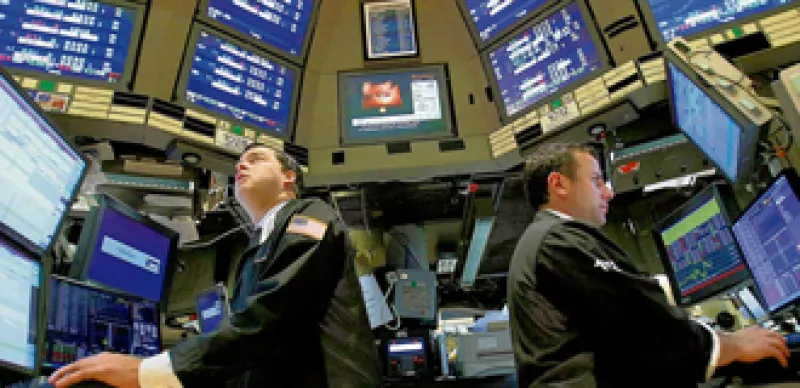

Prior to the proliferation of HFT, both retail and institutional investors came together to seek profit as owners of a company, and as a result helped support crucial capital raising and secondary market functions for American business owners. But seemingly what we have now is a major portion of market participants – HFTs – who are unregulated, often undercapitalized, and who provide no redeeming social function. As I see it, they exist to extract value from real investors one fraction of a penny at a time, over and over again.
While our firm’s ability to embrace technological change has served us well, I must draw the line with HFT. At the risk of sounding alarmist, the May 6th “flash crash” and subsequent trading halts in individual securities were the proverbial canary in the coal mine. If regulators do nothing, our country risks significant damage to our lauded capital markets system, and subsequently our national security. Should financial terrorists fail to honor trades, they would overwhelm undercapitalized clearing firms that some HFTs use. In minutes, numerous trades would have the potential of failing to clear, and our system would risk a disaster that makes the fall of 2008 look like a cakewalk.
HFTs claim that they provide necessary liquidity when trading. While this may seem true, the differences in the responsibilities between HFTs and registered market makers are where the dangers lie. Registered market makers, increasingly a dying breed, have strict capital requirements and three main responsibilities to the investing public: 1) Make an orderly market when imbalances between buyers and sellers occur, 2) Bring two customers together to facilitate trades, and 3) Act as an agent representing customers. Many of them failed to do so during the crash of 1987, with dramatic consequences. Similarly, many HFTs pulled their bids during the “flash crash” of so they would not be supporting a falling market. HFTs have none of the capital requirements, regulations or responsibilities that registered market makers comply with, yet they are endorsed by trading venues and ignored by regulators.
Exchanges have exacerbated the problem. No longer non-profit institutions with a public duty, exchanges and alternative trading venues realized that speed and reduced latency created an informational advantage, even within a time frame of microseconds, and struck deals with HFTs to sell access to powerful bandwidth capabilities. These arrangements allowed HFTs to scalp profits from real investors by discovering their trade intentions and running in front of their orders. It’s akin to thousands of people walking down the street with money in their pockets, and pickpockets knowing which people have the most money and the precise location of that wallet for the picking. In the past, when human specialists and market makers were caught front-running orders, they were banned from the industry. On the contrary the exchanges are now encouraging a form of legalized front-running at investors’ expense.
As more HFTs enter the market, speed and latency are like an arms race with participants taxing capacity. Just recently it was reported that one HFT purposely placed 5,000 bids per second in an attempt to jam and slow down the NYSE’s quote system. This jamming technique gave the culprit another trading advantage in picking off high bids and low offers. Is this type of technological casino gaming good for the system in the name of “liquidity?” Does this leave a positive impression with investors? Given the “flash crash” as one of the main reasons for the waning interest of individual investors in the stock market, the answer is no.

In order for the market to return to its true function of capital raising and away from a select few computer warriors, lawmakers and regulators should consider the following changes:
1) Subject HFTs to the same regulatory scrutiny as anyone making a two sided market. Scrutinize their books, capital and technology and be satisfied that they are not purposely or accidentally placing our system at risk.
2) Exchanges should alter their profit model by charging all market participants on a message traffic basis, not bandwidth, as at least 95 percent of all messages going into the NYSE are cancels or cancel/replaces of orders that will never be executed. This will eliminate frivolous posting of orders which go unexecuted and only attempt to sniff out real orders to enable technological front-running. Nobody will send 5,000 messages per second down to any exchange in an attempt to derail a competitor if it costs them real money.
3) Change the take and pay model for buyers and sellers. Each party pays 5 cents per hundred shares traded to the exchange as a fee. Anyone who cancels a bid or offer before there is a trade pays 5 cents per hundred. Registered market makers pay zero, unless they cancel a quote before a trade takes place.
4) Move to a Central Limit Order Book. The book must be protected up and down at all prices. Only price and time get priority when trading. Solid bids and offers will get priority, not phony ones that are cancelled in microseconds. Price and time priority has worked for over two hundred years, why are we trying to destroy it?
5) Examine and consider raising the net capital requirements for clearing agents servicing HFTs. Currently these firms allow many HFTs to use more leverage than most investors. Should HFT-originated trades not clear and the system go awry, these firms could go bankrupt in seconds and set off yet another dangerous chain reaction. If HFTs register as a market–maker, they benefit from the same margin requirements as other market makers, but absent those market maker duties. HFT’s should post the same margin as any other public market participants – 50 percent.
Washington and our legislators must act quickly before the next canary dies in the coal mine.
Gene Noser is the co-founder of New York-based agency brokerage Abel/Noser Corp. that has provided institutional trade execution and trade cost analysis since 1975.